


World Fair Play Day 2026 around the Globe
World Fair Play Day 2026 once again highlighted that fair play is far more than a sporting principle. It is a universal value system built on respect, honesty, solidarity, equality and responsibility. Across the world, numerous events were organised to celebrate these ideals and to promote ethical conduct in sport and society.
This summary focuses on four cities — Warsaw, New Delhi, Uşak and Brussels — each of which marked World Fair Play Day in its own distinctive way. Although the programmes differed in format and atmosphere, they all reflected the same central message: fair play is a shared responsibility that should guide people not only in competition, but also in everyday life.
In Warsaw, Poland, nearly 100 representatives from sport, public institutions and organisations gathered at the National Library for the event “The Power of Values in Sport”, organised by the International Fair Play Committee. The meeting created a meaningful space for discussion about honesty, responsibility, equality and the role of sport in today’s world. Video messages were delivered by CIFP President Sunil Sabharwal and WADA President Witold Bańka, both underlining the importance of protecting the values of sport through real action.
The Warsaw event also featured messages from leading Polish and international sports figures, including Iga Świątek, Ewa Pajor, Adam Małysz, Monika Pyrek, Renata Mauer-Różańska, Zbigniew Bródka and Gregor Deschwanden. Hanna Wawrowska, Vice-President of the International Fair Play Committee and host of the event, emphasised that although people may differ, values should unite rather than divide them. A symbolic highlight was the joint reading of Pierre de Coubertin’s “Ode to Sport” by Olympic and Paralympic medallists.
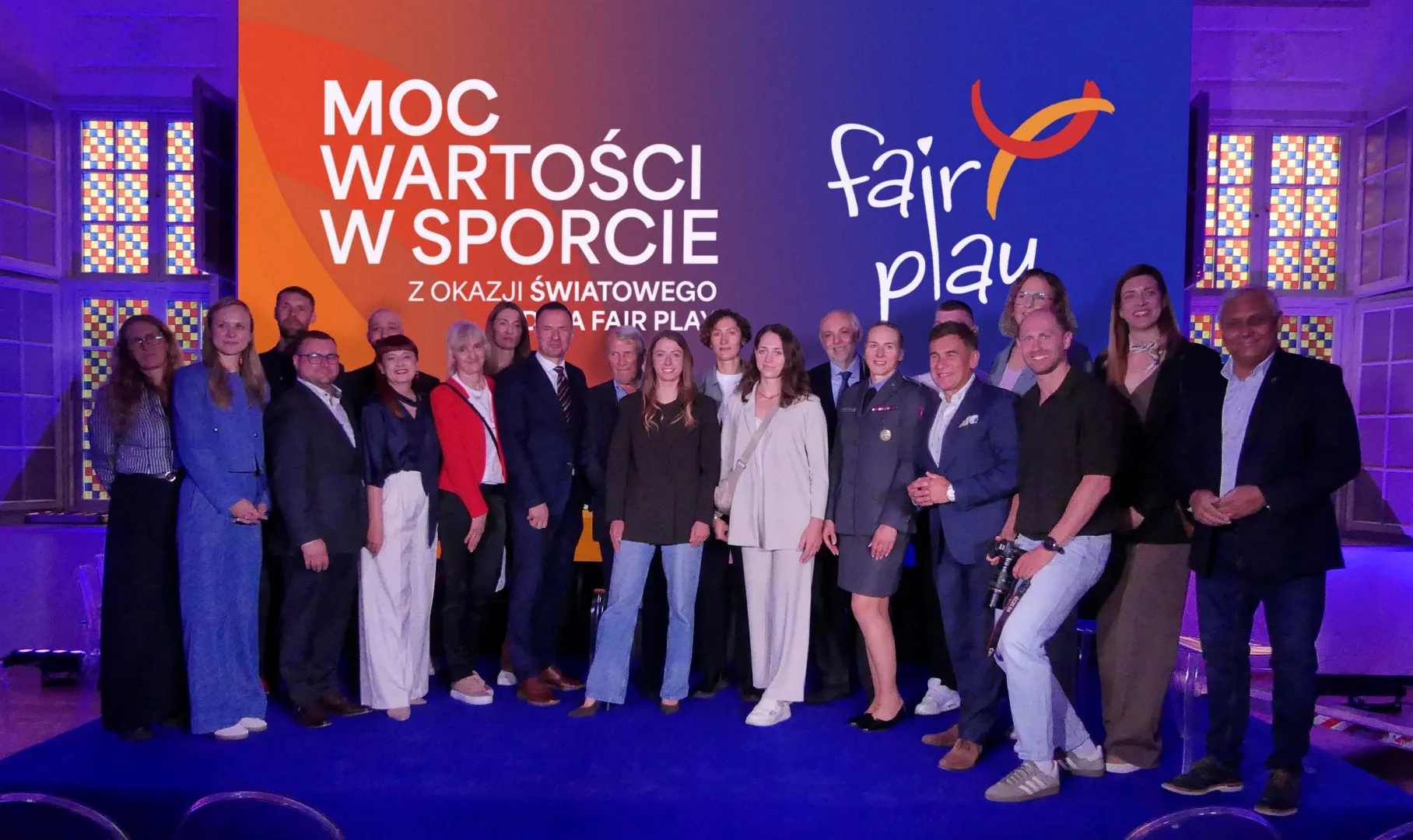
The programme in Warsaw also included speeches and panel discussions on leadership, artificial intelligence, pressure in sport, equality and modern sports management. Representatives of the Ministry of Sport and Tourism and the Polish Olympic Committee stressed the educational role of sport and the importance of Olympians as ambassadors of fair competition.
In New Delhi, India, the International Symposium on World Fair Play Day 2026 was hosted at the ISIC Institute of Rehabilitation Sciences. Organised by the Dr. B. R. Ambedkar Sports Foundation and COSMO Foundation, with the endorsement of the International Fair Play Committee, the symposium brought together global leaders, scholars, practitioners and youth representatives. According to the organisers, more than six million participants joined worldwide through hybrid participation.
The event opened with a welcome address by Prof. Dr. Chitra Kataria, followed by a keynote speech from CIFP President Sunil Sabharwal, who spoke about the global responsibility to uphold ethics, integrity, respect and value-based sport. Yamini Kumar Jaipuria, a leading supporter of Fair Play initiatives, also delivered a special address and played a key role in supporting the event through the COSMO Foundation.
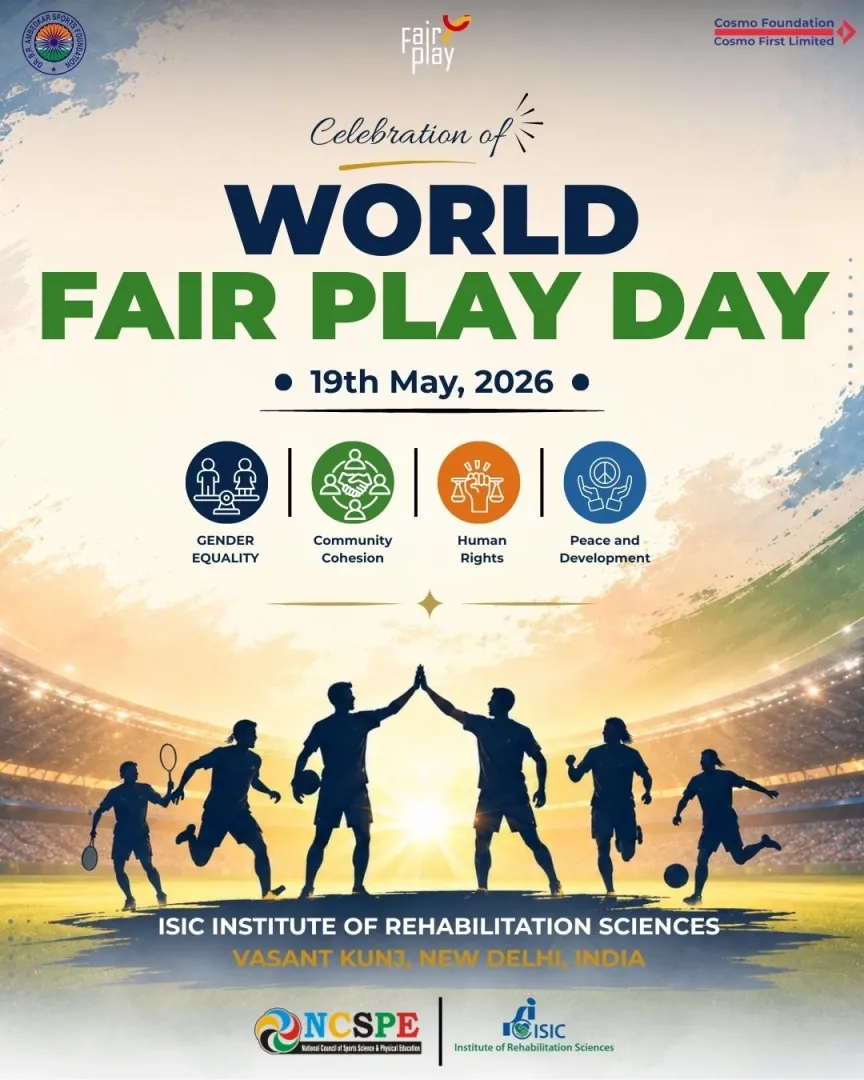
A Fair Play Pledge Ceremony formed an important part of the programme, alongside the formal release of the book Sports Injuries by Prof. Dr. Sunil Dabas. Three panel discussions explored fair play in global sports governance, education systems and youth development, as well as traditional sports as tools of peace, inclusion and cultural harmony. The symposium concluded by reaffirming India’s growing role in the global Fair Play movement and proposed the establishment of a National Fair Play Committee of India.
In Uşak, Türkiye, World Fair Play Day was celebrated together with the 19 May Commemoration of Atatürk, Youth and Sports Day. The city hosted the official launch of the “Sports-Based Social Cohesion and Rehabilitation Project for the Prevention of Crime”, an initiative designed to support disadvantaged and at-risk youth through sport. The event was organised by the Protection Board Presidency of the Uşak Chief Public Prosecutor’s Office, the Uşak Probation Directorate and the Fair Play Commission of the Turkish National Olympic Committee.
The celebration began with a ceremonial parade, where students, athletes and members of the local protocol marched with Turkish flags and fair play messages. The programme continued at the Uşak Science High School Sports Hall, attended by Uşak Governor Serdar Kartal, Chief Public Prosecutor İsmet Çınar, TMOK Fair Play Commission President Remzi Yılmaz and many guests.
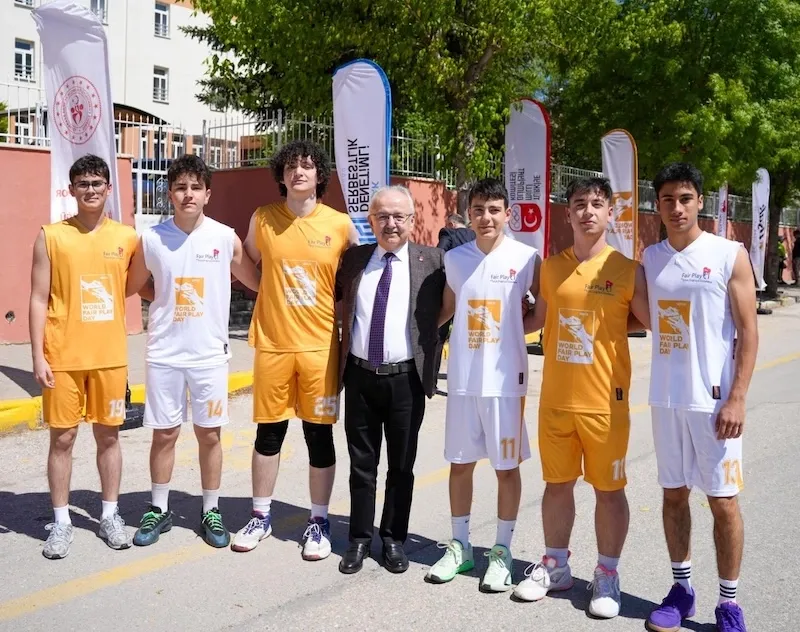
Speakers in Uşak underlined that fair play belongs not only in sport but in every area of life. The newly launched project, also known through the idea “From School to the Olympics”, aims to guide children aged 12–18 under probation measures toward sport, discipline, teamwork, healthy habits and stronger social integration. The day also included award ceremonies, folk dance performances, basketball and volleyball exhibition matches, and Pick-Pong demonstrations — an inclusive sport developed in Türkiye to bring together people of different ages, genders, abilities and social backgrounds.
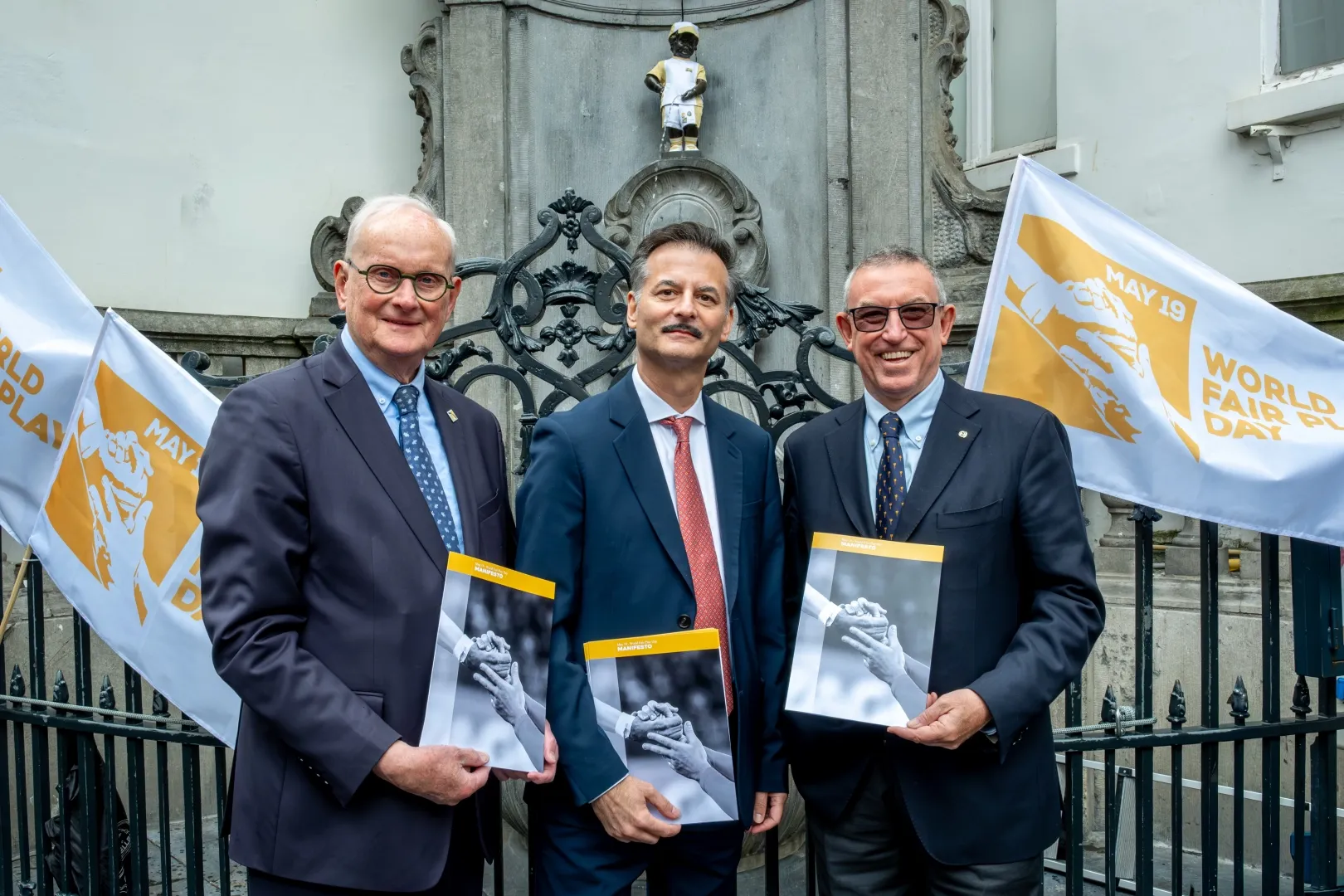
In Brussels, Belgium, World Fair Play Day was marked through a symbolic and festive event featuring one of the city’s most famous figures: Manneken Pis. On 19 May at 1:15 p.m., Manneken Pis symbolically ratified World Fair Play Day and signed the Fair Play Manifesto, wearing a special World Fair Play Day costume. Through humour and tradition, the event communicated that fair play is not limited to sport, but belongs to everyone.
The Brussels celebration was supported by the European Fair Play Movement, International Fair Play Committee and the Panathlon International . Sunil Sabharwal, President of CIFP, stressed that World Fair Play Day is an important milestone, but that fair play must be practised every day. Giorgio Chinellato, President of Panathlon International, highlighted the importance of value-based education in schools and sports clubs, while Philippe Housiaux, President of the European Fair Play Movement, recalled the long journey that helped the initiative gain global recognition.
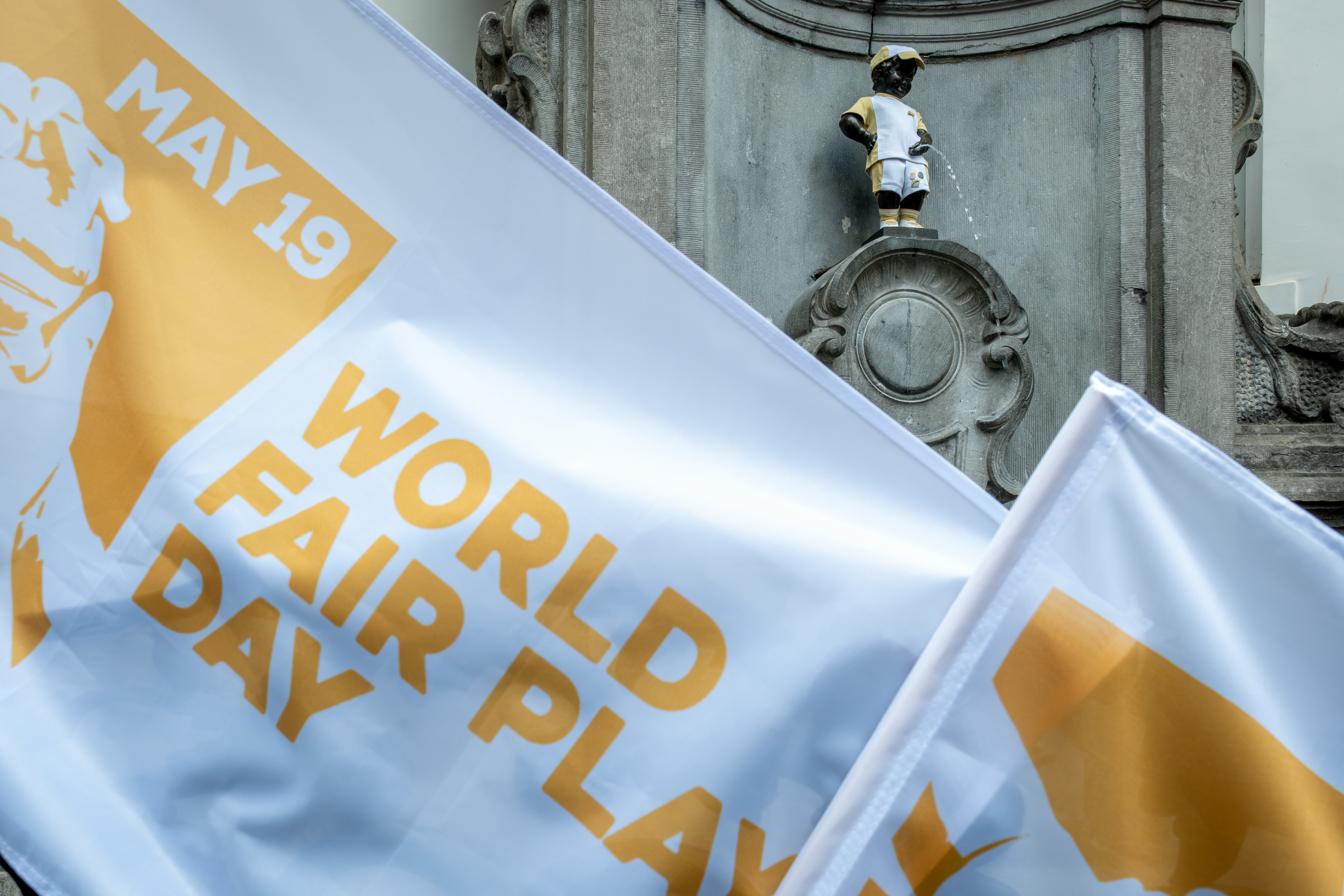
The festive atmosphere was strengthened by the Fanfare of the Friends of Manneken Pis, turning the event into both a public celebration and a strong symbolic message. Brussels presented fair play as a value of respect, fairness, solidarity and shared joy.
Together, these four celebrations created a global collage of World Fair Play Day 2026. Warsaw focused on dialogue, education and the role of Olympians. New Delhi strengthened international cooperation and India’s leadership in ethical sport. Uşak connected fair play with youth rehabilitation, social cohesion and community responsibility. Brussels used folklore and symbolism to bring the message of fair play closer to the public.
The events showed that fair play is not simply about following rules during competition. It is about how people treat one another, how institutions educate future generations, how athletes use their influence, and how societies build trust and respect. World Fair Play Day 2026 demonstrated that sport can be one of the strongest forces for good when it remains true to its values.


