


Three World Cup Moments That Highlighted the Spirit of Fair Play
Goals, dramatic comebacks and unforgettable performances define every great football tournament. Yet some of its most meaningful moments happen after the competition has effectively ended — when players look beyond the result and recognise the person standing on the other side.
Three moments from the FIFA 2026 World Cup demonstrated how respect, empathy and dignity can remain part of the game even when the stakes are at their highest.
Ronaldo turns to Modrić after Croatia’s elimination
Portugal’s Round of 32 match against Croatia ended in dramatic fashion. Ivan Perišić gave Croatia the lead before Cristiano Ronaldo equalised from the penalty spot. Gonçalo Ramos then scored in stoppage time to complete Portugal’s 2–1 comeback and end Croatia’s campaign.
As the Portuguese players began to celebrate, Ronaldo sought out Luka Modrić. The two former Real Madrid teammates embraced and exchanged a few words on the pitch. Photographs captured a meeting between two players who had just experienced completely different sides of the same result: qualification for one and elimination for the other.
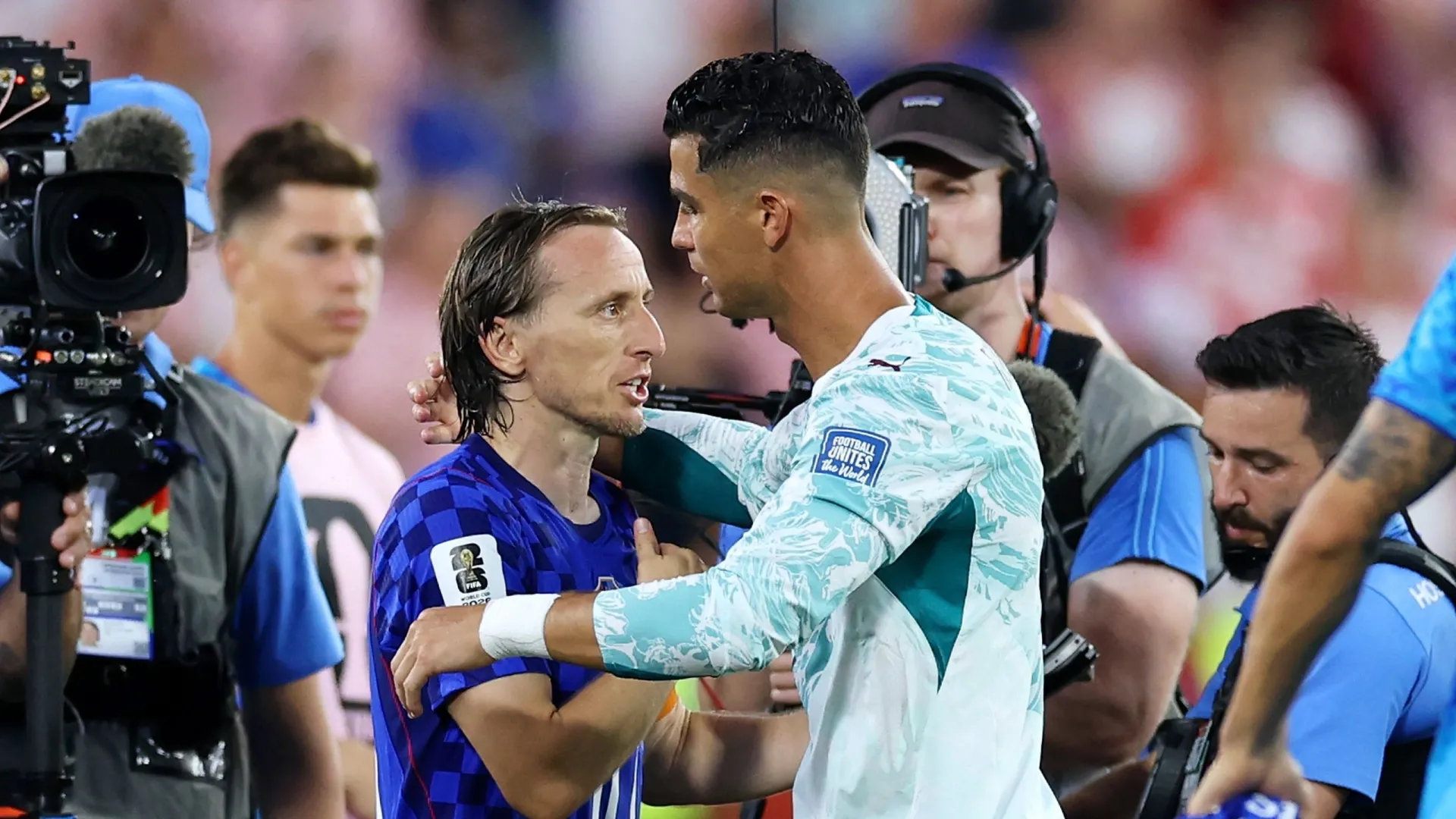
Ronaldo later described Modrić as a legend of the game, wished him well and expressed his hope that the Croatian midfielder would continue playing. His response acknowledged not only their shared history but also the achievements of a respected opponent at a deeply disappointing moment.
Matheus Cunha steps away from the celebrations
Japan came close to recording a historic victory against Brazil in Houston. Kaishu Sano put Japan ahead in the first half, but Casemiro equalised after the interval. With extra time approaching, Gabriel Martinelli scored in the 95th minute to give Brazil a 2–1 victory.
The decisive attack followed a misplaced pass by Japanese midfielder Ao Tanaka. At the final whistle, Tanaka was visibly distraught as Brazil celebrated its place in the next round.

Matheus Cunha noticed him and walked over to offer support. Photographs show the Brazilian forward embracing and consoling Tanaka after the match. The scene was independently documented by Reuters and Getty Images.
Cunha could not change the result or remove the disappointment. What he could do was ensure that an opponent carrying the emotional weight of the defeat was not left entirely alone.
Spain honours Argentina after the final
The final between Spain and Argentina remained goalless throughout regulation time. Argentina were reduced to ten players late in the second half, and substitute Ferran Torres scored the decisive goal in the 106th minute. Spain’s 1–0 victory secured the country’s second men’s world title.
The closing stages and the immediate aftermath were tense. There was pushing and shoving involving members of both teams after the final whistle. The medal ceremony, however, produced a very different image.
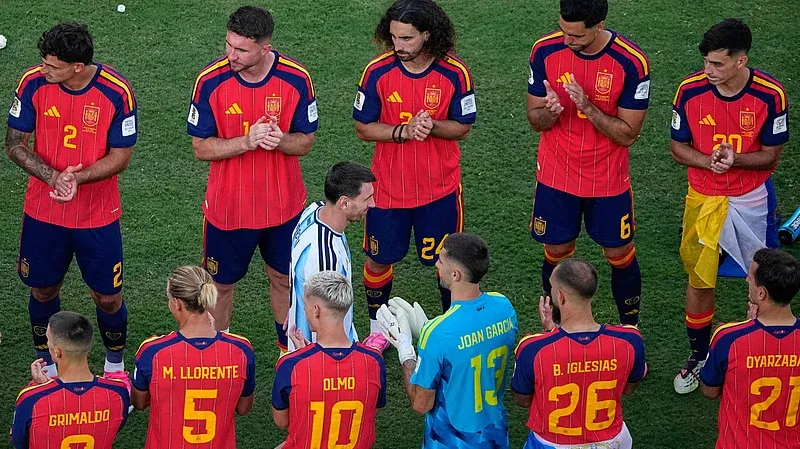
Before Argentina’s players went forward to receive their runners-up medals, the Spanish team formed a guard of honour. The newly crowned champions stood in two lines and applauded Lionel Messi and his teammates as they walked towards the presentation stage. The gesture was recorded in the official video of the ceremony and reported by the Associated Press.
The guard of honour did not erase the tension that had preceded it. Instead, it demonstrated that respect could still be restored after an intensely contested final.
By interrupting their own celebrations to acknowledge the losing finalists, the Spanish players recognised the effort required to reach football’s biggest match. Their applause carried a simple message: victory and respect for the opponent do not have to be competing values.
The human side of competition
These three moments took different forms.
Ronaldo acknowledged a former teammate and long-standing rival at the end of a painful elimination. Cunha offered comfort to a player who appeared to blame himself for a decisive goal. Spain’s players collectively recognised the defeated finalists before receiving the trophy.
What connected the moments was the ability to look beyond the score.
Fair play is sometimes expressed through a major decision: admitting an infringement, correcting an error or giving up a competitive advantage. At other times, it is found in an embrace, a few considerate words or a line of players offering applause.
None of these gestures changed a result. They did, however, influence how the victories and defeats were remembered.
They showed that competing with complete commitment does not require ignoring an opponent’s dignity — and that the way athletes respond after the final whistle can be as meaningful as anything they do while the ball is in play.


