


Virtuosity in Victory and Defeat
When Excellence Elevates Itself Mutually. Our CIFP Council Member Cheche Vidal's fourth article from a special project for CIFP: In the women’s giant slalom event, three athletes offered an extraordinary demonstration of what it means to bring Fair Play to its highest level.
 Jacquelyn Martin/AP/AP
This is a composite and singular case within the series. The women’s giant slalom at the Milano Cortina 2026 Winter Olympic Games produced a manifestation of ethical excellence that operated simultaneously across two dimensions: that of a Fair Play Act (Type 1) and that of Virtuous Competitiveness / Areté (Type 2).
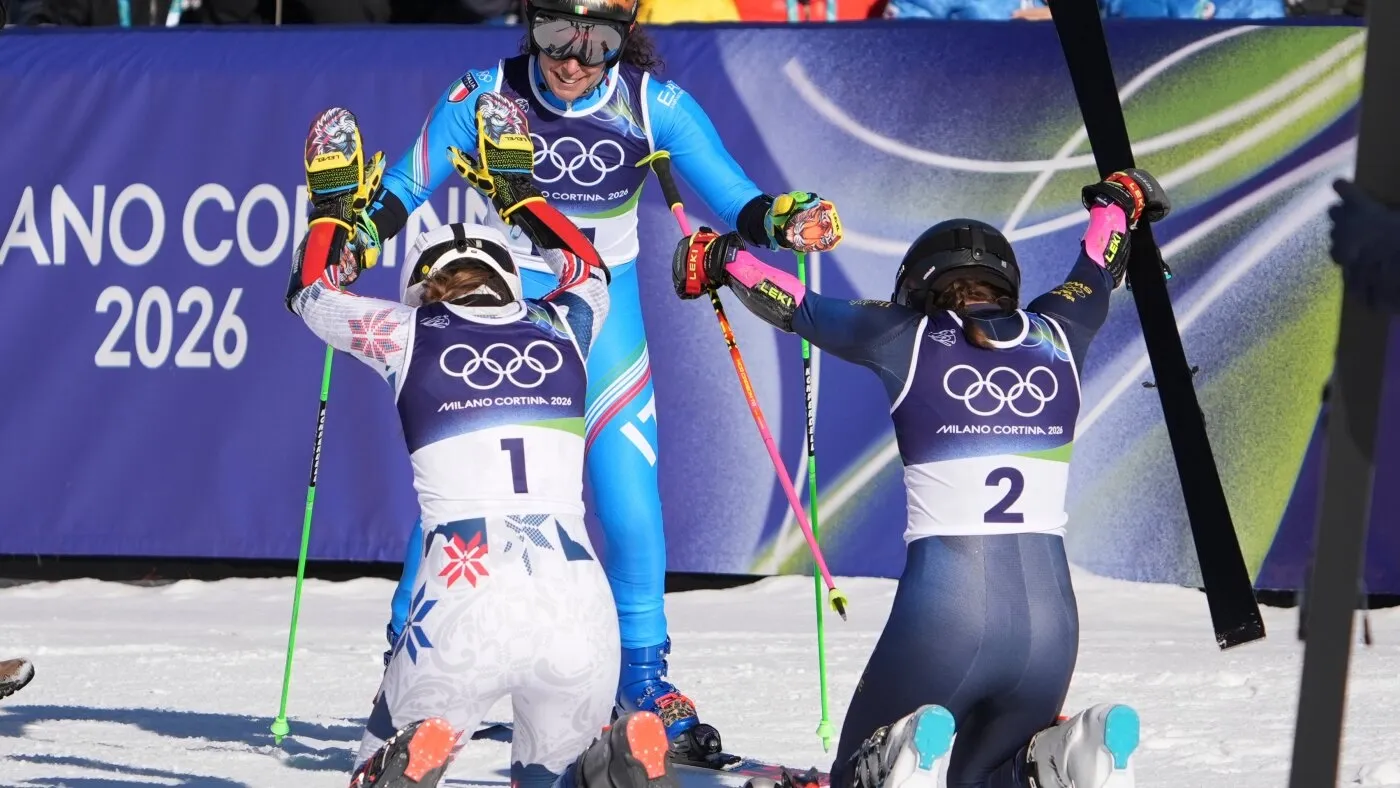
Federica Brignone (Italy) captured the gold medal after months of forced absence following an accident, competing that day still carrying pain in her legs. Her run was a demonstration of extraordinary technical mastery and courage, marked by resilience and command under the maximum pressure of an Olympic final.
Very close behind finished Sara Hector (Sweden) and Thea Louise Stjernesund (Norway), who delivered equally outstanding runs and had contested first place among themselves and against Brignone until the final result was confirmed. As Brignone’s performance concluded, both knelt before her in a voluntary act of admiration and recognition — spontaneous, unforced, and far beyond what protocol or the ethos of sport demands.
Brignone embodied aretê in its competitive expression: resilience, precision, and mastery under pressure. Hector and Stjernesund embodied aretê in its moral expression: genuine humility after having themselves delivered performances of the highest level. Greatness in victory did not remain confined to the podium; it was distributed among all who competed.
VARIABLE SCORING
The Analytical Framework developed in this exercise evaluates ethical performances in sport through thirteen variables, organised according to the three types of ethical excellence recognised by the CIFP: Type 1 (Fair Play Act), Type 2 (Virtuous Competitiveness / Areté) and Type 3 (Systemic Excellence). Not all variables apply to every case: each report includes only those variables that are operative in the performance being analysed. The scoring scale runs from 0 to 3 per variable. As this is an evolving framework, we expect to refine both the variables and their application as the exercise progresses. The variable scoring for this case is presented below.

ANALYTICAL NOTE
What distinguishes this case within the series is its composite character: three athletes, three roles, and a single ethical truth that unifies them. Brignone did not perform an interpersonal gesture, she competed. And she did so with her entire being, with a damaged body and an intact will, revealing at every gate the character of the competitor she has chosen to be. Hector and Stjernesund actively recognised the excellence of the athlete who had surpassed them, assuming the emotional cost of that recognition at the moment of greatest personal exposure.
This episode confirms what the Greek philosophers understood through agonism: without capable and worthy rivals, victory loses its depth. The excellence of one does not diminish that of the others; it makes it visible. And when all three, from their distinct roles, choose well, the winner competing to the limit of her capacity, the defeated honouring that capacity, sport reaches precisely what it promised from its origins: a school of human excellence.
AI can measure. Only human consciousness can judge.
The cases documented in this series form part of the evaluation process for the CIFP/IOC Fair Play Award at the Milano Cortina 2026 Winter Olympic Games.
By Cheche Vidal · Council Member, CIFP · CEO & Founder, Dribbli
Source:https://substack.com/@dribbliethosport


